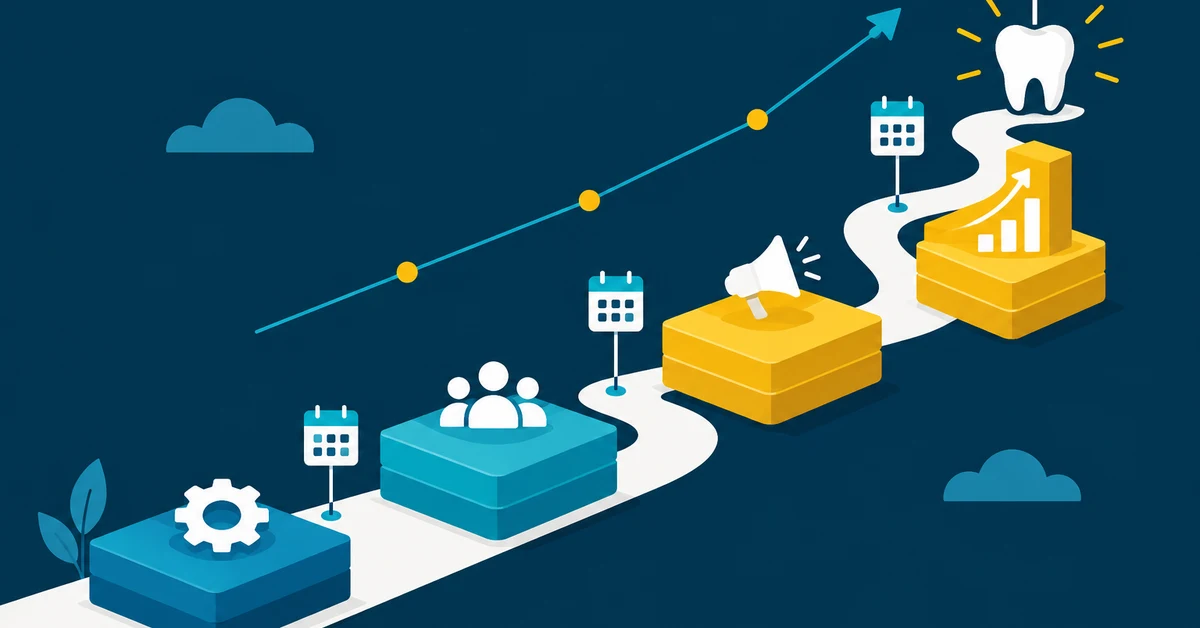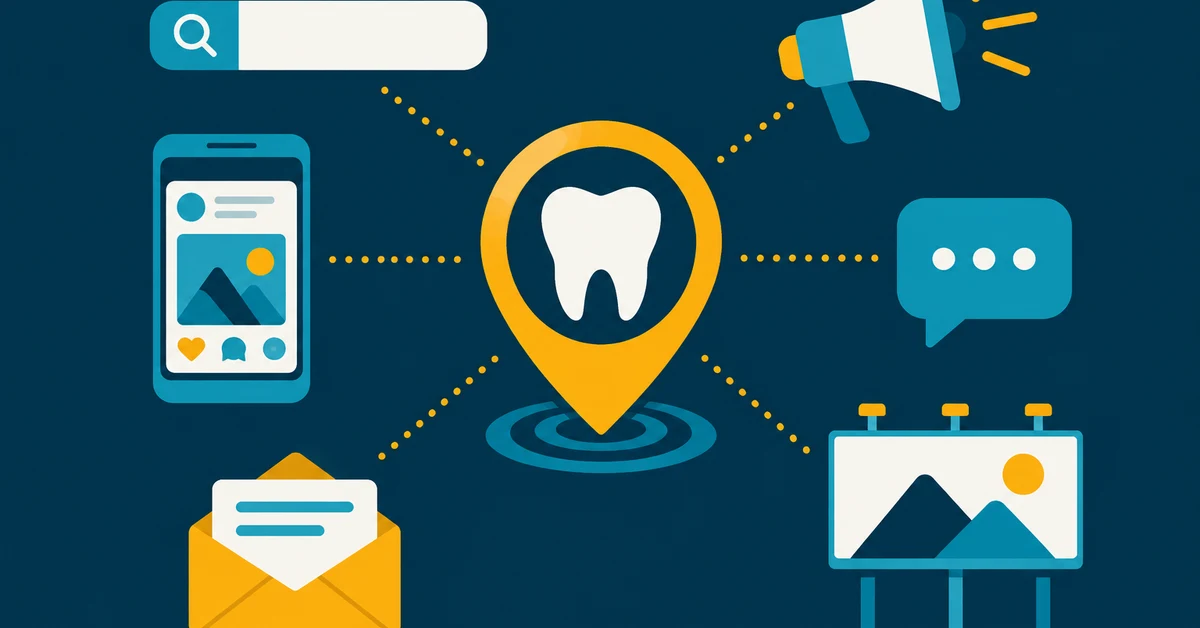
Dental advertising channels ranked: Google Ads and Performance Max, LSAs, ChatGPT Ads, social, mail and more, plus how to budget, track results, and stay compliant.
Most dental practices aren't short on advertising options. They're short on a clear answer to one question: which ads actually bring in new patients, and which ones just spend money? Google Ads, Local Services Ads, Facebook and Instagram, ChatGPT Ads, mailers, billboards, radio. Every rep who calls the office has a reason their channel is the one you're missing.
This guide ranks the main dental advertising channels the way we evaluate them for our own clients: by how close each one sits to a patient who is ready to book, what it takes to run well, and how to tell if it's working. It's written for practice owners who want to make better decisions, not become ad managers.
First, Know the Difference Between Demand and Attention
Every ad channel falls into one of two groups, and mixing them up is the most expensive mistake we see.
Demand channels catch people already looking
Someone searching "emergency dentist near me" or "dental implants cost" has a need right now. Google Ads (Search and Performance Max), Local Services Ads, and AI search ads put you in front of that person at the moment they're choosing. These channels usually convert fastest and are the easiest to measure.
Attention channels create interest
Someone scrolling Instagram isn't looking for a dentist. Social ads, mailers, billboards, and radio put your name in front of people before they need you, or nudge people who have been thinking about Invisalign or implants for months. These can work very well, especially for elective care, but they take longer and need a strong offer.
A healthy advertising plan usually starts with demand channels, then adds attention channels once the basics are converting. If you need the bigger picture first, our dental marketing strategy guide walks through how the pieces fit together.
Before You Spend: Three Things That Decide Whether Any Ad Works
Ads don't create new patients on their own. They send people to your phone and your website. If those break, every channel looks bad.
- Your website converts. Fast on mobile, clear click-to-call, insurance and services easy to find, a simple booking form. See what a converting dental website looks like.
- Your phones get answered. We regularly see practices miss a large share of new patient calls during lunch and after hours. A missed call from an ad is money you paid for and lost. Our post on call handling for dental practices covers the fixes.
- You can track calls and forms by source. Call tracking numbers, form tracking, and Google Analytics set up correctly. Without this, you're guessing. More on lead attribution and tracking for dentists.
Get these three right and the same ad budget produces noticeably more booked patients.
The Dental Advertising Channels, Ranked
Here's how we rank the main options for a typical general or family practice. Specialists and elective-heavy practices may shuffle the order, but the logic holds.
1. Targeted Google Ads: Search and Performance Max
Google Ads let you target specific, high-value searches: "dental implants near me," "same day crowns," "Invisalign cost." You control the keywords, the message, the landing page, and the budget. For practices with the right budget, this is now where we put the first dollar.
Search campaigns are the precise tool. You choose the services you want to grow and send each search to a page built for that service. Performance Max (PMax) campaigns use Google's automation to show your ads across Search, Maps, YouTube, Gmail, and the Display network from one campaign. Google is also moving Local Services Ads toward Performance Max, so building a well-structured PMax campaign now puts you where that inventory is heading instead of waiting for the change to happen to you.
- Best for: practices that want predictable new patient volume, want to promote high-value services, and can commit a consistent monthly budget.
- Why it ranks first: you reach people at the moment of decision, you control which services get the budget, and you can scale up or down without waiting on Google's LSA system.
- What to watch: PMax needs clean conversion tracking and enough budget to learn. Without both, it will happily spend on low-quality traffic. Exclude existing patients and branded searches where you can, review search terms on Search campaigns, add negative keywords, and send traffic to dedicated landing pages, not your homepage.
For depth, read our complete guide to Google Ads for dentists and how much to spend on Google Ads, or see our PPC management for dentists.
2. Google Local Services Ads (LSAs)
LSAs are the "Google Screened" listings that can show above everything else for searches like "dentist near me." You pay per lead (a call or message), not per click, and you can dispute leads that aren't real patients.
LSAs used to be the easy first channel for most practices. In recent months, we've seen them become less reliable. Lead volume swings from week to week, placement is harder to predict, and practices have less control over which services and patients they attract. They still produce good patients in many markets, but we no longer treat them as the foundation of a plan.
- Best for: general, family, and emergency dentistry, and practices with smaller budgets that want pay-per-lead pricing.
- Why it's still worth running: top-of-page placement, simple setup, and costs tied to actual contacts.
- What to watch: your reviews and response time affect where you show. Answer every LSA call, dispute junk leads weekly, and don't let LSAs be your only source of new patients.
Our full breakdown: Local Services Ads for dentists, or see how we run LSA management.
3. AI Search Ads (ChatGPT Ads)
Patients increasingly ask AI platforms like ChatGPT, Gemini, Claude, and Perplexity for recommendations: "Who's a good implant dentist near me?" ChatGPT has started showing ads alongside those answers, and it's still early, which means less competition than Google.
- Best for: practices in competitive markets that want to get in before costs rise.
- Why it matters: these are high-intent conversations, often about larger cases.
- What to watch: it's a newer channel, so start with a test budget and track every call and form.
Learn more in ChatGPT Ads for dentists: what you need to know and on our ChatGPT Ads page.
4. Facebook and Instagram Ads
Social ads are the strongest attention channel for dentistry. They work best for elective services with a clear offer: Invisalign, implants, whitening, cosmetic consults, and new practice launches.
- Best for: elective and cosmetic care, startups, and new locations.
- Why it works: precise local targeting, video, and offers that get people who have been "thinking about it" to finally act.
- What to watch: social leads are colder than search leads. Speed matters. Call new leads within minutes, not days, and expect more follow-up before they book.
See our complete guide to dental Facebook ads or our social ads service.
5. Retargeting
Retargeting shows ads to people who already visited your website but didn't book. It's inexpensive and keeps you in mind while patients compare options.
- Best for: practices with steady website traffic and longer decision cycles (implants, ortho, cosmetic).
- What to watch: be careful with tracking pixels on appointment forms and patient portals. Health data rules apply, so keep tracking off pages where patients share personal health information.
More in 3 ways to use retargeting for your dental practice.
6. Direct Mail
Mailers still work in some markets, especially for new practices, new movers, and older demographics. They're hard to track unless you use a unique phone number and offer on every piece.
- Best for: new practice openings, new mover campaigns, and practices near dense residential neighborhoods.
- What to watch: response rates are low, so the offer and the mailing list do most of the work. Track every drop separately.
7. Billboards, Radio, and TV
Traditional media builds name recognition but rarely produces measurable new patients on a typical practice budget. It can make sense for multi-location groups or established practices that have already maxed out digital channels.
- Best for: DSOs, large groups, and brand-building in a market where you already dominate search.
- What to watch: high minimum spend and weak tracking. Use a dedicated phone number and watch branded search volume to judge impact.
What About SEO? Advertising's Long-Term Partner
SEO isn't advertising, but it changes how much advertising you need. Practices that rank in the Google map pack and organic results get new patient calls without paying for each click. The usual pattern: ads fill the schedule now while SEO builds a base that lowers your cost per patient over time.
Visibility in AI search answers works the same way. Strong reviews, clear service pages, and consistent business details help AI platforms recommend you. See our dental SEO guide or our SEO for dentists service.
How to Pick Your Mix
There's no single right mix, but these starting points match what we see work most often.
If you're a general or family practice
If your budget allows, start with a targeted Google Ads campaign (Search, Performance Max, or both) for core and emergency services, and run LSAs alongside it rather than relying on them alone. On a tighter budget, LSAs are still a reasonable place to begin. Add Facebook and Instagram once you have a specific elective service to push.
If you're focused on implants, Invisalign, or cosmetic
Lead with Google Search Ads to service-specific landing pages, add social ads with a clear consult offer, and layer retargeting. Build a fast follow-up process for every lead.
If you're a startup or new location
Use every demand channel plus social ads and a mailer to new movers. Your reviews and map ranking will be thin at first, so paid channels carry more of the load early. Our startup practice playbook goes deeper.
If you're a pediatric practice
Search ads and social ads aimed at parents tend to outperform. Check our pediatric dental marketing page for specifics.
How Much to Budget for Dental Ads
Most growth-focused practices spend 4% to 7% of collections on total marketing, with a meaningful share of that going to paid ads. A better way to set your ad budget is to work backward:
- Decide how many new patients you want from ads each month.
- Estimate your cost per new patient by channel (your agency or past data should tell you this).
- Multiply. If you want 20 new patients from ads and your blended cost is $200 each, you need about $4,000 a month in ad spend.
- Check that against what a new patient is worth to you in year one.
Our 2027 dental marketing budget guide covers this in detail.
How to Tell If Your Ads Are Working
Clicks, impressions, and likes don't pay the bills. Track these instead:
- Qualified calls and forms by channel. Real people asking about appointments, not spam or existing patients.
- Booked new patients by channel. Ask your front desk to confirm source, and compare against call tracking.
- Cost per new patient. Total spend divided by booked new patients. This is the number that tells you where to put more money.
- Answer rate. If it's low, fix the phones before adding budget.
Review these monthly. Move budget toward channels with the lowest cost per new patient, and give newer channels a fair test (usually 60 to 90 days) before you judge them.
Dental Advertising Rules to Keep in Mind
Dental ads are regulated at the state level. Before you launch, check your state dental board's rules on:
- Specialty claims. Many states restrict terms like "specialist" or "implant specialist" to board-recognized specialists.
- Offers and discounts. "Free" exams and discounted services often need specific disclosures.
- Testimonials and before-and-after photos. Get written patient consent, and never share patient health information without authorization.
Google and Meta also have their own healthcare ad policies. A good agency handles this for you, but it's your license on the line, so it's worth knowing the basics.
Frequently Asked Questions
What is the best form of advertising for a dental practice?
For most practices with the budget to support it, a targeted Google Ads campaign (Search and Performance Max) is the most dependable source of new patients because it reaches people already searching for a dentist and lets you control which services you promote. Local Services Ads are a useful addition, but we've seen them become less reliable lately. Social ads work well as a second channel for elective services.
How much do dental ads cost?
It depends on your market, services, and competition. Search clicks for dental keywords often cost several dollars to $20 or more in competitive areas. The more useful number is cost per new patient, which varies by channel and should be tracked monthly.
Are Facebook ads or Google ads better for dentists?
Google ads usually win for immediate needs like emergencies and general care. Facebook and Instagram ads are often better for elective services like Invisalign and implants. Many practices use both. Read Facebook ads vs. Google ads for dental practices.
Are Local Services Ads still worth it for dentists?
Often, yes, but with lower expectations than a year or two ago. In recent months we've seen LSA lead volume and placement become less predictable. Google is also moving LSAs toward Performance Max. If you have the budget, a targeted Google Ads campaign gives you more control, with LSAs running alongside it.
How long does it take for dental ads to work?
Search ads and LSAs can bring calls within the first few weeks. Performance Max usually needs a few weeks of learning before results settle. Social ads and newer channels like ChatGPT Ads typically need 60 to 90 days of testing and optimization to show their real cost per patient.
Should I run ads myself or hire an agency?
You can launch ads yourself, but managing keywords, budgets, landing pages, tracking, and compliance is a weekly job. Most practices get better results with a partner who does it every day. Our guide on how to choose a dental marketing partner lists the questions to ask.
TL;DR
- Split channels into demand (Google Ads, LSAs, ChatGPT Ads) and attention (social, mail, billboards). Start with demand.
- Fix the website, phones, and tracking before you spend more on ads.
- LSAs have become less reliable in recent months. With the right budget, a targeted Google Ads campaign, including Performance Max, is the stronger foundation, and it's where LSAs are heading anyway.
- For most practices the ranking is: Google Ads (Search and PMax), LSAs, ChatGPT Ads, social ads, then retargeting, mail, and traditional media.
- Set your ad budget by working backward from a new patient goal and cost per new patient.
- Judge every channel on booked new patients and cost per new patient, not clicks.
- Check your state dental board's rules on specialty claims, offers, and testimonials.
Not Sure Where Your Ad Budget Should Go?
Book a free strategy call. We'll review your current ads, tracking, and call handling, then show you which channels are most likely to bring in your next new patients. No cost, no obligation.
Schedule Your Free Strategy CallTags

About the Author
Dan Brian
Co-Founder & Director of Client Services, DentalScapes
Dan Brian is co-founder and Director of Client Services at DentalScapes. A recognized early adopter of AI in dental marketing, Dan has been experimenting with and deploying AI tools since before they became mainstream — from AI-assisted content and Generative Engine Optimization (GEO) to predictive campaign analytics. He leads DentalScapes' marketing education programs for practice owners, including The Dental Marketing Mix podcast and The Dental Domination Program book.