A practical dental reputation management playbook: earn more Google reviews under the 2026 rules, reply HIPAA-safely, and handle bad reviews.
Before a new patient calls your office, they've already read about you. They've looked at your star rating, skimmed your most recent reviews, and probably compared you with two or three other practices in the map pack. Your online reputation is the first appointment, and you're not in the room for it.
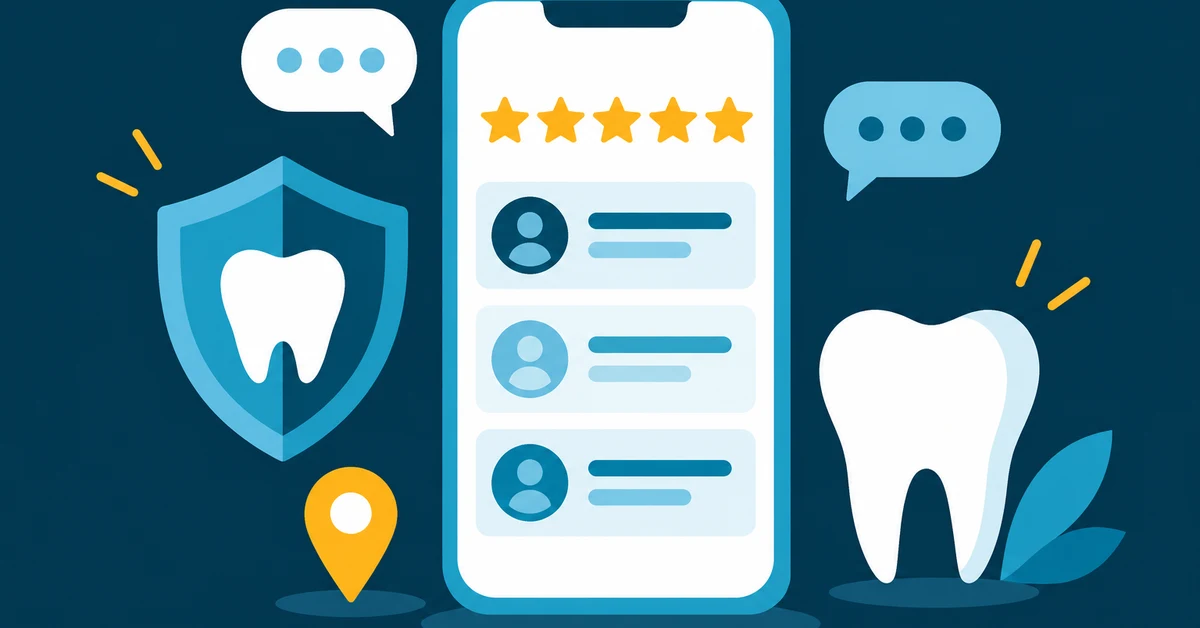
Dental reputation management is how you take some control of that first impression: earning a steady flow of genuine reviews, replying in a way that builds trust (and stays HIPAA-safe), handling the occasional bad review well, and keeping your profiles accurate everywhere patients look. This guide covers how we run it for our clients in 2027, including the review rule changes Google made in 2026 that caught a lot of practices off guard.
Why Reputation Matters More Than It Used To
Reviews have always mattered to patients. What's changed is how many places they now show up and how much they affect who gets seen at all.
Reviews decide who gets the call
Patients choosing a new dentist rarely pick the first name they see. They compare. A practice with a 4.8 rating, hundreds of reviews, and recent, detailed comments wins that comparison over a practice with a 4.9 and a few dozen reviews from three years ago. Volume, recency, and what people actually say all count.
Reviews help decide who ranks
Review signals are one of the factors behind Google's local map pack: how many reviews you have, how often new ones come in, your rating, and whether you respond. Strong reviews won't fix a weak Google Business Profile, but weak reviews will hold back a strong one. Our dental local SEO map pack playbook covers the other ranking factors.
Reviews now feed AI search
When a patient asks ChatGPT, Gemini, Claude, or Perplexity for "a good family dentist near me," those AI platforms lean on trust signals to decide which practices to mention. Reviews, and the themes inside them, are among the strongest of those signals. A practice whose reviews consistently mention "gentle," "great with kids," or "explained everything" gives AI platforms something specific to repeat. More on this in how Google reviews power AI search and SEO and on our GEO for dentists page.
The Rules Changed in 2026: What's No Longer Allowed
Earlier this year, practices across the country watched their review counts drop overnight, including five-star reviews from real patients. Part of that was Google's moderation getting stricter and re-checking older reviews. Part of it was a policy update that made several common front-desk habits violations. We covered both in "Vanishing Act" and Google Changes the Rules on Reviews. The short version:
Tactics that now put your profile at risk
- Asking patients to mention a staff member by name. Google's April 2026 update explicitly prohibits requesting reviews with specific content, including names.
- Review quotas for staff. Directing your team to collect a set number of reviews is now listed as rating manipulation.
- In-office iPads and kiosks. Reviews posted from your office network or device look like the practice wrote them. Many get filtered.
- Review gating. Sending a "How did we do?" survey and only asking happy patients to post on Google. Google prohibits selectively asking for positive reviews, and the FTC's rule on fake reviews also targets practices that suppress negative ones.
- Incentives of any kind. Discounts, raffles, gift cards, or a free whitening for a review. Not worth it.
- Bursts. Fifty requests in one week after six quiet months looks unnatural, even when every review is real.
What enforcement looks like
Google rarely tells you. Penalties include reviews that only the author can see, temporary freezes on new reviews, removal of existing reviews, and in serious cases a public warning on your profile that fake reviews were removed. If your count has stalled or dropped without explanation, assume your process needs an audit.
How to Earn More Reviews the Right Way
The good news is that the compliant approach is also the one that works best over time. It's simple, it's consistent, and it doesn't depend on your front desk remembering to ask.
1. Ask every patient, after the visit, on their own phone
Send one review request by text or email shortly after the appointment, with a direct link to your Google review form. Every patient gets it, not just the ones who seemed happy. Patients review from home on their own device, which is exactly what Google wants to see.
2. Keep the wording neutral
"Thanks for visiting us today. Would you share your experience on Google?" is enough. Don't suggest a star rating, don't ask for specific words, and don't name team members. You'll find patients mention names and details on their own when the experience was good.
3. Make it steady, not seasonal
Automated, post-visit requests create a natural, steady review velocity. A practice seeing 300 patients a month that consistently earns a few reviews a week will outrank a practice that runs a review push twice a year.
4. Let the team set it up, not chase it
Your team's job is to create the experience worth reviewing and to mention, without pressure, that a text will follow. "You'll get a quick text from us after today's visit. We always appreciate feedback." That's it. No scripts, no quotas.
This is the system behind our review generation service, and it's how our clients keep growing review counts without tripping Google's filters.
How to Reply to Reviews Without Creating a HIPAA Problem
Replying to reviews is good practice. It shows prospective patients you're listening, and it's one of the signals Google looks at. But dental practices have a constraint most businesses don't: HIPAA.
The one rule that matters most
Never confirm, even indirectly, that the reviewer is your patient. No names, no treatment details, no appointment dates, no "as we discussed at your visit." Even when the patient shared everything publicly, your reply can't add to it or confirm it. The U.S. Department of Health and Human Services has fined dental practices for disclosing patient information in replies to online reviews, so this isn't theoretical.
Replying to positive reviews
Keep it short, warm, and general. Thank them, mention something about your practice (not their care), and vary the wording so replies don't read like a template.
"Thank you for the kind words! Our team works hard to make every visit comfortable, and it means a lot to hear that. We look forward to seeing you again."
Replying to negative reviews
Remember who you're really writing for: the next 100 people who read the review, not just the reviewer. A calm, professional reply often does more for your reputation than the review did damage.
- Wait a few hours. Never reply while frustrated.
- Acknowledge without confirming. "We're sorry to hear about this experience" works. "We're sorry your crown appointment ran late" does not.
- State your standard. "We take every concern seriously and want every visit to be comfortable and clear."
- Take it offline. Invite them to call the office manager directly, by name and number.
- Keep it brief. Two to four sentences. No arguing, no explaining the clinical side.
"We're sorry to hear this, and we take all feedback seriously. Because of privacy laws we can't discuss details here, but we'd welcome the chance to talk. Please call our office manager, Sarah, at (555) 555-0100."
For more reply examples, see how to respond to Google reviews for your dental practice.
Handling Fake, Unfair, or Off-Topic Reviews
You can't delete a Google review because you disagree with it. You can ask Google to remove reviews that break its policies.
What Google will usually remove
- Reviews from people who were never patients and describe another business
- Reviews from current or former employees, or competitors (conflict of interest)
- Harassment, hate speech, or profanity
- Spam, or clusters of reviews that look coordinated
- Reviews that include someone's personal information
How to request removal
Flag the review from your Google Business Profile, choose the policy it violates, and document why. If the first request is denied, Google's review management tool lets you appeal. Be patient and specific. In the meantime, post a calm reply so readers see your side handled professionally.
What not to do
Don't threaten the reviewer, offer money to remove a review, or ask staff and family to post positive reviews to "balance it out." All of these can make things worse with Google, with the FTC, or with your state dental board.
Beyond Google: The Rest of Your Reputation
Google is where most of the action is, but patients look elsewhere too.
- Healthgrades, Zocdoc, and insurance directories. Claim your listings and keep hours, address, insurance, and doctor info accurate.
- Facebook. Recommendations show up for people who find you on social. Reply there too. Our social media management team handles this for clients.
- Yelp. Claim and monitor it, but don't ask for Yelp reviews. Yelp discourages businesses from soliciting reviews and may filter them.
- Your own website. A reviews or testimonials page with real patient quotes and video helps visitors who arrive from ads or search. Get written permission before featuring any patient.
Consistency matters. Your name, address, phone, and hours should match everywhere. Mismatched listings confuse patients and Google alike.
Use Your Reviews as Feedback, Not Just Marketing
Reviews are free, unfiltered patient feedback. Read them monthly as a team and look for patterns.
- Multiple mentions of long waits or billing surprises point to an operations fix, not a marketing one.
- Complaints about phones going unanswered are costing you new patients from every channel. See our post on call handling for dental practices.
- Repeated praise for a service or team strength belongs on your website and in your ads.
The best reputation management happens in the operatory and at the front desk. Software just makes sure the good experiences get counted.
What to Track Each Month
Keep the scorecard short:
- New Google reviews this month and how that compares with the top three practices in your map pack
- Average rating, overall and for the last 90 days
- Review velocity: are reviews arriving steadily or in clumps?
- Response rate and time: every review answered, ideally within a couple of business days
- Removed or hidden reviews: a sudden drop is an early warning that something in your process needs attention
- Themes: the top three things patients praise and the top issue they raise
If you're not sure how you compare, look at your top competitors' review counts and recent activity. That gap tells you how much ground there is to make up. Our dental marketing strategy guide shows where reputation fits in the overall plan.
Frequently Asked Questions
What is dental reputation management?
It's the ongoing work of earning genuine patient reviews, replying to them professionally and HIPAA-safely, addressing negative or fake reviews, and keeping your practice information accurate across Google, Healthgrades, Facebook, and other sites patients use to choose a dentist.
How many Google reviews does a dental practice need?
There's no magic number. What matters is how you compare with the practices you compete with in the map pack, and whether new reviews keep coming in. A steady flow of recent reviews usually matters more than a large total from years ago.
Can I ask patients for reviews in the office?
You can mention that a review request will follow, but the request itself should go out by text or email after the visit so patients post from their own device. In-office tablets and kiosks are one of the most common reasons dental reviews get filtered.
Is it okay to reply to a negative review at all?
Yes, and you should. Keep it short, don't confirm the person is a patient or mention any details of care, and invite them to call the office. Future patients judge you as much by the reply as by the review.
Why did my Google reviews disappear?
Usually one of three reasons: Google's moderation re-checked older reviews and filtered ones that looked suspicious, your request process broke one of the 2026 policy rules (staff names, quotas, in-office devices), or a temporary Google glitch. Audit your process first, then request reinstatement for reviews you know were genuine.
Should I pay for reputation management software?
Software helps automate post-visit requests and alerts you to new reviews, but it's only as good as how it's set up. Make sure it sends requests to every patient, uses neutral wording, and doesn't filter out unhappy patients before they reach Google.
TL;DR
- Your reviews affect who patients choose, where you rank in the map pack, and what AI platforms say about you.
- Google's 2026 rules ban staff-name requests, review quotas, and review gating. In-office kiosks and bursts get reviews filtered.
- Earn reviews with one neutral text or email after every visit, to every patient, on their own phone.
- Reply to every review, and never confirm someone is a patient or mention their care. HIPAA applies.
- Flag reviews that break Google's policies. Never pay, threaten, or stack fake positives.
- Track new reviews, rating, velocity, response rate, and themes monthly, and use the feedback to fix operations.
Is Your Review Process Putting Your Profile at Risk?
Book a free strategy call. We'll review your Google rating, review velocity, and request process against the 2026 rules, compare you with your top local competitors, and show you how to grow reviews safely. No cost, no obligation.
Schedule Your Free Strategy CallTags

About the Author
Dan Brian
Co-Founder & Director of Client Services, DentalScapes
Dan Brian is co-founder and Director of Client Services at DentalScapes. A recognized early adopter of AI in dental marketing, Dan has been experimenting with and deploying AI tools since before they became mainstream — from AI-assisted content and Generative Engine Optimization (GEO) to predictive campaign analytics. He leads DentalScapes' marketing education programs for practice owners, including The Dental Marketing Mix podcast and The Dental Domination Program book.