Where good dental leads come from in 2027, what to avoid when buying leads, and the follow-up and tracking that turn inquiries into booked new patients.
Most practices that tell us they need more dental leads actually have a different problem. The leads are coming in. They're just not turning into booked patients: calls go to voicemail, web forms sit until the next morning, and nobody can say which marketing produced the patients who did book.
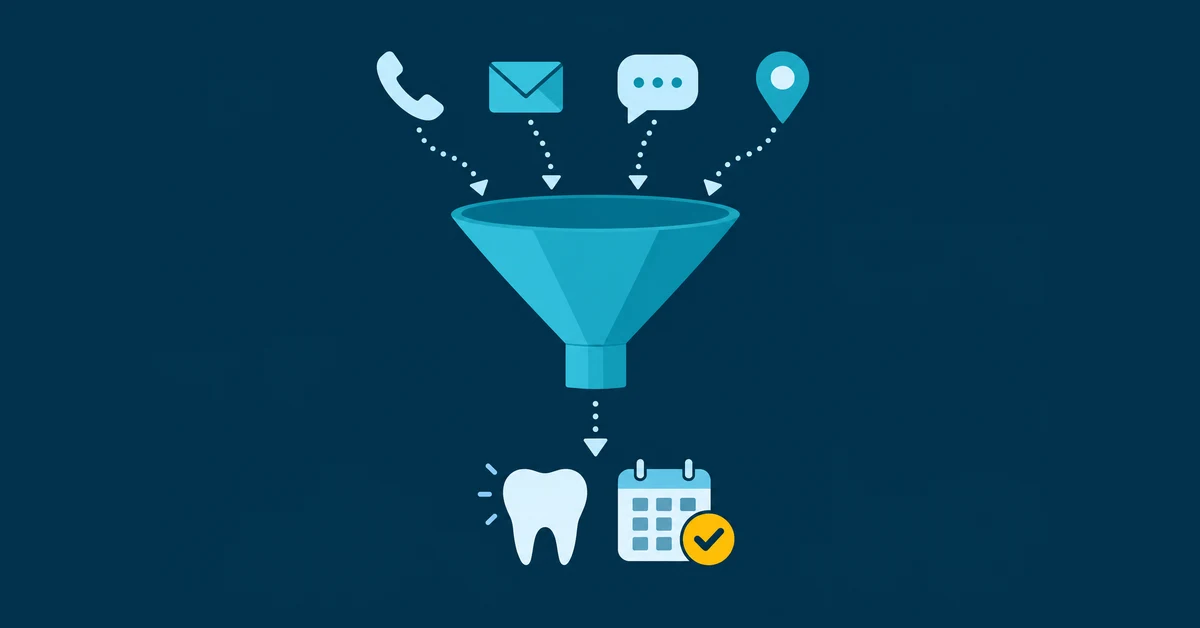
Real dental lead generation covers both halves: getting the right people to call or fill out a form, and turning those inquiries into appointments. This guide walks through where good dental leads come from in 2027, what to skip, and the follow-up and tracking that decide whether any of it pays off.
A Lead Is Not a Patient
A lead is anyone who raises their hand: a phone call, a web form, a chat, a text, a booking request. A new patient is someone who shows up and sits in the chair. Everything between those two points is where marketing money gets won or lost.
Here's the math most practices never run. Say your ads bring in 60 new-patient calls and forms a month:
- If your team books 35% of them, that's 21 new patients.
- If your team books 60% of them, that's 36 new patients.
Same ad budget, same leads, 15 more patients a month. Before you spend another dollar generating leads, find out what happens to the ones you already get. Our posts on raising your booking rate and turning leads into loyal patients go deeper on this.
Know what a good lead looks like
Not every inquiry is worth the same. A qualified lead is a real person, in your area, asking about a service you offer, who could realistically book. Spam calls, existing patients rescheduling, vendors, and wrong numbers are not leads, even though many reports count them. Agree on a definition first, then judge every channel by qualified leads and booked patients, not raw volume.
Where Good Dental Leads Come From in 2027
Patients find dentists in a handful of places. These are the sources we see produce the most qualified leads, roughly in order of how fast they work.
1. Google Ads (Search and Performance Max)
When someone searches "emergency dentist near me" or "dental implants cost," they need help now. Targeted Google Ads put you in front of that intent the same day, and with the right budget they're the most dependable source of new-patient leads we manage. Build campaigns around your highest-value services, send each one to a dedicated landing page, and exclude the searches you don't want (jobs, free clinics, DIY). Our dental PPC management page covers how we run them.
2. Local Service Ads (as a supporting channel)
Local Service Ads charge per lead and sit at the very top of some searches. They can add calls, but they've been less reliable in recent months, and Google is folding more of that inventory into Performance Max. Use them alongside Google Ads, not instead of them. More in our dental advertising guide.
3. Your Google Business Profile and the map pack
For "dentist near me" searches, the map pack gets a big share of the clicks and calls. A complete, active profile with steady reviews is one of the lowest-cost lead sources a practice has. It takes a few months to build, then keeps producing. See our map pack playbook or our local SEO service.
4. Your website and SEO
Your website is where most leads actually convert, no matter where they started. Organic rankings for treatment pages ("dental implants in [city]") bring in high-intent leads without a per-click cost, and those same pages help you show up when patients ask AI platforms like ChatGPT, Gemini, Claude, and Perplexity for a recommendation. Read our dental SEO guide for the full approach.
5. Facebook and Instagram ads for elective offers
Meta ads don't catch people who are searching. They create demand. That makes them a good fit for elective, offer-driven services like Invisalign, whitening, implants, and new-patient specials, often with a native lead form. Expect more leads at a lower cost, but also more tire-kickers, so fast follow-up matters even more. Our Facebook ads guide covers setup.
6. Patients you already have
Referrals, reactivation of patients who haven't been in for 18+ months, and family members of current patients are the cheapest leads you'll ever get. A simple referral ask, a reactivation text and email campaign, and a short monthly email keep these coming. Our 27 dental marketing ideas include several low-cost ways to do this.
Be Careful With Bought Leads
You'll get pitches from companies selling "exclusive" dental leads or appointments at a flat price per lead. Before you sign, ask a few questions:
- Is the lead really exclusive, or is the same person sold to three other practices nearby?
- Where did the lead come from? A vague answer usually means low-quality traffic or incentive offers ("free whitening") that attract people who won't stay.
- Who owns the data and the ad account? When you stop paying, does the lead flow stop completely?
Some practices get value from these programs, but most do better building lead sources they own: their own ad accounts, their own Google Business Profile, their own website. If you're not sure what you own today, Dan's recent episode on who really owns your dental practice's marketing includes a 30-minute ownership audit.
Turn Visits Into Leads
Traffic that doesn't call or fill out a form isn't a lead. A few things make the biggest difference:
- Tap-to-call and "Request an Appointment" at the top of every page, especially on mobile, where most patients find you.
- Short forms. Name, phone, email, and what they need. Insurance questions can wait for the call.
- Landing pages built for one service. An ad for implants should land on an implant page with cost, financing, and before-and-after photos, not your homepage.
- Answers to the questions patients actually have: cost ranges, insurance, financing, and whether you take new patients this week.
- More than one way to reach you. Text and chat catch people who won't call during work hours.
Our website teardown walks through what a high-converting dental site looks like, page by page.
Follow-Up Decides Whether Leads Turn Into Patients
This is where most dental lead generation falls apart, and it's the cheapest part to fix.
Respond within the hour
Someone who fills out a form at 8pm is usually contacting other practices too. Call every web lead back within an hour during business hours, and send an automatic text and email right away so they know you got it. The practice that calls first usually books the patient.
Don't stop after one try
One voicemail isn't follow-up. Try a call, a text, and an email over the first few days. Many patients book on the second or third contact, simply because they were busy the first time.
Answer the phone
Missed calls are missed patients, and new patients rarely leave a voicemail. Look at when calls go unanswered (lunch, early morning, the last hour of the day) and cover those times with a call rotation or an answering service.
Give the front desk a simple script
The best front desks offer a specific appointment time ("I have Tuesday at 10 or Thursday at 2, which works better?") instead of asking "When would you like to come in?" They answer insurance and cost questions with confidence, and they always try to book before hanging up. We build call-handling coaching around real recorded calls because the fixes show up fast once you listen.
Track Leads to Booked Patients
If you can't see which channel produced a booked patient, you'll end up cutting the wrong thing. The basics:
- Call tracking numbers for each major channel (Google Ads, Google Business Profile, Meta, website), with recordings.
- Form and chat tracking tied to the same system, so every lead lands in one place with its source.
- Booked or not booked marked on each lead, either by the front desk or by reviewing call recordings.
- Your new-patient count from the practice management system each month, so you can check marketing reports against reality.
The three numbers to watch
- Qualified leads per month, by channel.
- Booking rate: the share of new-patient leads that schedule.
- Cost per new patient: marketing spend divided by new patients who actually showed up.
Cost per lead is useful, but cost per new patient is the number that tells you what's working. A channel with cheap leads that never book is more expensive than one with pricier leads that do. Our 2027 budget guide shows how to use these numbers to size each channel.
Common Dental Lead Generation Mistakes
- Buying more leads before fixing follow-up. More leads into a leaky process means more waste.
- Sending all ad traffic to the homepage. Use dedicated landing pages for each service.
- Judging channels by clicks or "leads" that include spam and existing patients.
- Turning off Google Ads after a slow month without checking how many calls were missed or not booked.
- Running everything through accounts you don't own.
Frequently Asked Questions
What is dental lead generation?
Dental lead generation is the process of getting potential patients to contact your practice by phone, web form, chat, or text, and then turning those inquiries into booked appointments. It includes ads, SEO, your Google Business Profile, your website, and the follow-up process at the front desk.
What is the fastest way to get more dental leads?
Targeted Google Ads for your highest-value services, sent to dedicated landing pages, are the fastest dependable option. They can produce calls within days. Pair them with fast follow-up, or the leads won't turn into patients.
How much does a dental lead cost?
It varies widely by market, service, and channel. Emergency and general dentistry leads usually cost less than implant or Invisalign leads. Focus on cost per new patient instead: what you spend to get someone in the chair.
Should I buy dental leads from a lead-generation company?
Be cautious. Ask whether leads are exclusive, where they come from, and who owns the ad accounts and data. Most practices get better long-term results building lead sources they own.
How quickly should we follow up with a new dental lead?
Within an hour during business hours, with an automatic text and email right away. Then follow up with a mix of calls, texts, and emails over the next few days.
TL;DR
- A lead isn't a patient. Fix what happens to your current leads before buying more.
- Best sources: Google Ads (Search and Performance Max) for fast, high-intent leads; Google Business Profile and SEO for steady, lower-cost leads; Meta ads for elective offers; existing patients for the cheapest leads of all.
- LSAs are a supporting channel, not the main one.
- Be careful with bought leads. Own your ad accounts, profile, and website.
- Follow up within the hour, try more than once, answer the phone, and always offer a specific appointment time.
- Track every lead to a booked patient and judge channels by cost per new patient.
Getting Leads That Don't Turn Into Patients?
Book a free strategy call. We'll look at where your leads come from, how your calls and forms are handled, and what each new patient is really costing you, then show you where the biggest gains are. No cost, no obligation.
Schedule Your Free Strategy CallTags

About the Author
Dan Brian
Co-Founder & Director of Client Services, DentalScapes
Dan Brian is co-founder and Director of Client Services at DentalScapes. A recognized early adopter of AI in dental marketing, Dan has been experimenting with and deploying AI tools since before they became mainstream — from AI-assisted content and Generative Engine Optimization (GEO) to predictive campaign analytics. He leads DentalScapes' marketing education programs for practice owners, including The Dental Marketing Mix podcast and The Dental Domination Program book.